Spring Concert 2026
Celebrate the arrival of spring with an evening of powerful, exhilarating music, bringing together professional soloists and a vibrant community of local choirs for a truly memorable concert.21st March 2026 at 6:00pm
Chiswick School
Burlington Lane, Chiswick, W4 3UN
Rachmaninoff: Piano Concerto No 1
Soloist: Krzysztof Moskalewicz
Orff: Carmina Burana
Soloist: Olivia Doutney (Soprano)
Soloist: Sandeep Gurrapadi (Tenor)
Soloist: Stephen Whitford (Baritone)
Featuring
Chiswick Voices
Chiswick Community Choir
West London Free School Choir
The Fulham Boys School Year 7 Choir
Conductor: Dorian Dimitrov
Choir Director: Zac Moxon
Building on two outstandingly successful collaborations with Chiswick School and their esteemed Music Director and Conductor, Zac Moxon, HSO is thrilled to unite once more with Chiswick Voices and the Chiswick Community Choir. Their recent, critically acclaimed performance of Mahler’s Second Symphony was met with resounding praise, powerfully demonstrating the exceptional artistic synergy between these ensembles.
Sergei Rachmaninoff – Piano Concerto No. 1
Rachmaninov’s First Piano Concerto stands as a remarkable statement from a composer barely out of his teens, later refined with the wisdom of experience. Originally composed in 1891 and extensively revised in 1917, the concerto already bears the hallmarks of his mature style: sweeping lyricism, darkly glowing harmonies, and electrifying virtuosity. More compact than his later concertos but no less intense, it blends youthful bravura with emotional depth, offering both soloist and orchestra a thrilling showcase.
I. Vivace
The concerto opens with a dramatic, ringing call from the orchestra, answered immediately by the piano’s bold, cascading chords. This movement brims with energy and confidence, driving forward with restless momentum. Heroic gestures alternate with sweeping lyrical themes, as the piano weaves brilliant passagework through a tightly argued orchestral framework, building to a fiery close.
II. Andante
In contrast, the slow movement unfolds in a mood of quiet introspection. A gentle orchestral introduction leads to one of Rachmaninov’s long, singing melodies, entrusted to the piano. Poetic and intimate, the music glows with warmth and melancholy, rising at moments to passionate intensity before settling back into serene calm.
III. Allegro vivace
The finale bursts in with rhythmic vitality and sparkling virtuosity. Dance-like energy propels the movement, while sweeping themes recall the concerto’s opening spirit. The piano dominates with brilliant runs and powerful chords as orchestra and soloist race together toward a triumphant and exhilarating conclusion.
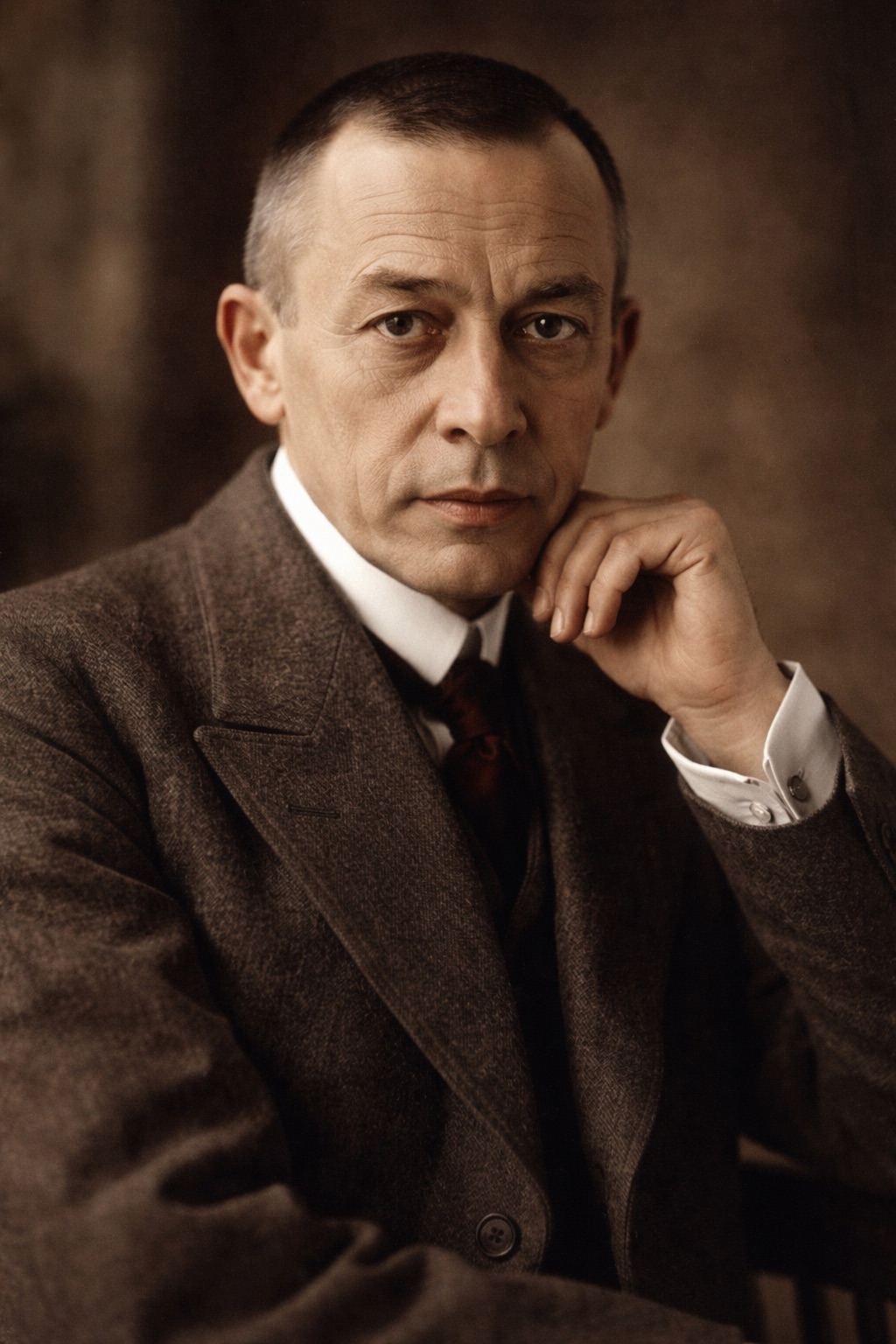
Carl Orff – Carmina Burana
Carmina Burana is a large-scale scenic cantata by Carl Orff, based on 24 medieval poems from the 13th-century manuscript of the same name discovered at the Benedictine monastery of Benediktbeuern in Bavaria. Written in Latin, Middle High German, and Old French, the work explores timeless themes of fate, fortune, love, desire, drinking, and the pleasures and anxieties of human life.
The cantata is framed by the famous chorus “O Fortuna”, which opens and closes the work. This powerful invocation of the Wheel of Fortune presents fate as unpredictable and cruel, setting the philosophical tone for the entire piece.
Between these framing movements, the work unfolds in three main sections:
-
Primo vere (In Spring)
Celebrates the return of spring and youthful vitality, with music that is energetic, rhythmic, and direct, often featuring dance-like patterns. -
In taberna (In the Tavern)
Focuses on drinking, gambling, and earthly excess. The music here is raw and boisterous, most famously including the tenor solo “Olim lacus colueram,” in which a roasted swan laments its fate. -
Cour d’amours (The Court of Love)
Explores romantic desire and sensuality through lyrical solos and choruses, culminating in the ecstatic soprano solo “Dulcissime.”
The final return of “O Fortuna” completes the cyclical structure, reinforcing the idea that human life is governed by forces beyond individual control.
Musically, Carmina Burana is notable for its primitive directness: bold rhythms, simple harmonies, relentless repetition, and massive choral and percussive forces. Orff deliberately rejected late-Romantic complexity in favor of elemental musical gestures, creating a work of extraordinary immediacy and theatrical power.
Since its premiere in 1937, Carmina Burana has become one of the most frequently performed choral works of the 20th century, admired for its visceral impact and universal appeal.
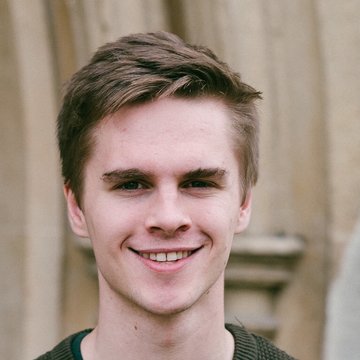
Krzysztof Moskalewicz (Piano)
Polish pianist Krzysztof Moskalewicz is an artist of exceptional sensitivity, whose interpretations are marked by natural expression and profound emotional depth.
Equally passionate about solo and collaborative performance, Krzysztof has performed as a soloist and chamber musician at many prestigious venues including Barbican Hall, Wigmore Hall, Birmingham Town Hall, Palacio de Festivales de Santander, and the Witold Lutosławski Polish Radio Concert Studio in Warsaw, alongside many other venues across Europe, Japan, and the United States. As a soloist, Krzysztof has performed with the Sussex Symphony Orchestra, Opole Philharmonic Orchestra, the Radom Chamber Orchestra, and the Fryderyk Chopin State Music School Symphony Orchestra.
Krzysztof has been invited to many international music festivals and piano courses worldwide. In 2015 he attended the Aspen Music Festival and School in Colorado. He worked with Maestro Thomas Adès at the International Musicians Seminar in Prussia Cove and Christian Blackshaw at the Hellensmusic Festival. In 2017 he was invited to perform both solo and chamber music at the 17th Encuentro de Música y Academia de Santander.
His debut album released in 2022 features all of Chopin’s Ballades alongside new compositions titled ‘Four Postcards’ by the Chinese composer Sun Keting. Notably, he has also recorded a unique recital on Chopin’s personal Pleyel piano, the very instrument on which the composer created some of his final works.
Krzysztof’s musical journey began at the age of seven under the tutelage of Renata Lasocka. In 2011, he graduated with honors from the Fryderyk Chopin State Music School in Warsaw, where he studied with Joanna Kurpiowska. He furthered his education at the Guildhall School of Music & Drama, earning a Master’s degree with distinction in 2017 under the guidance of Ronan O’Hora and receiving the prestigious Guildhall Artist Fellowship. He also completed a Professional Diploma at the Royal Academy of Music, studying with Ian Fountain.

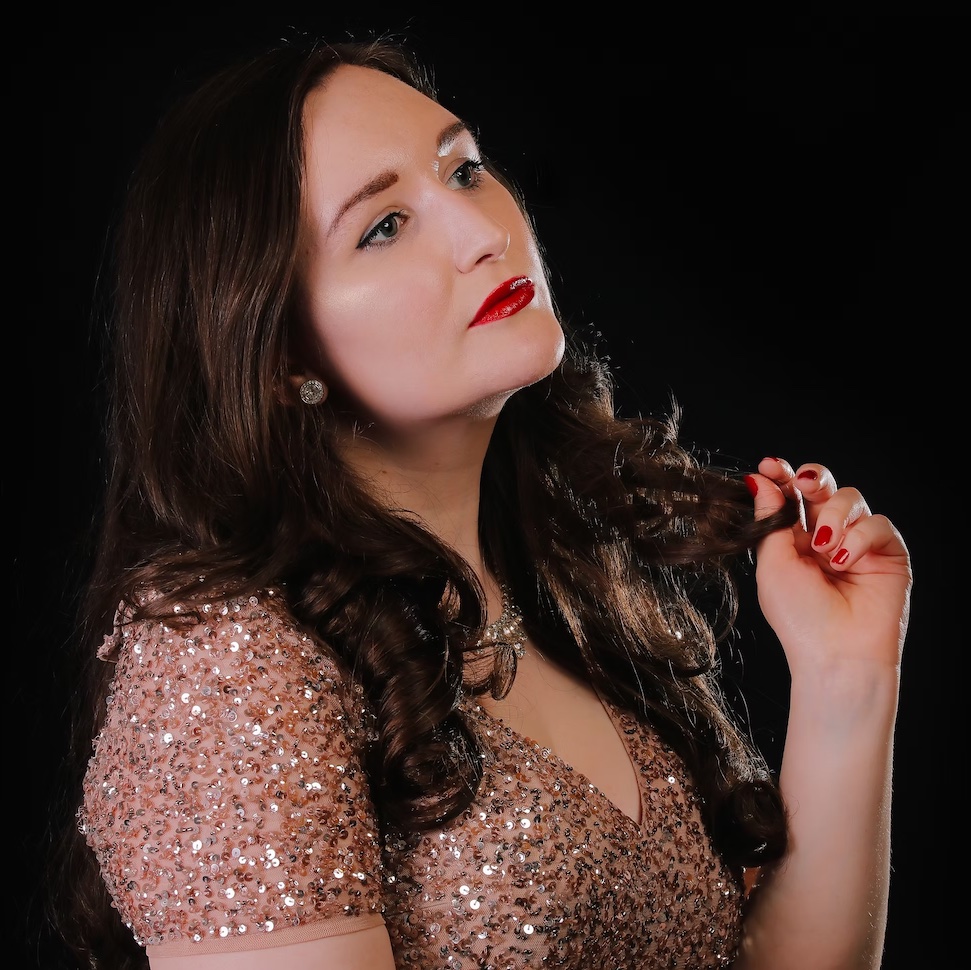
Olivia Doutney (Soprano)
Olivia Doutney is a spinto soprano of Swiss, Australian, and British heritage. In the 2023 season she expanded into dramatic repertoire, making a critically acclaimed debut in the title role of Puccini’s Turandot with Fabrique Opéra de Grenoble. She holds a Master’s degree from the Haute École de Musique de Genève and a Specialized Soloist Diploma from the Hochschule der Künste Bern, where she studied with Malin Hartelius.
Her operatic roles include Leonore (Fidelio), Micaëla (Carmen), Mimì (La Bohème), Ursuline (Ascanio), Mrs P in Michael Nyman’s The Man Who Mistook His Wife for a Hat (Swiss premiere), and appearances in works by Monteverdi, Lully, Donizetti, Campra, Bellini, Strauss, and others across Europe.
On the concert stage, Olivia has performed with ensembles including the Sinfonie Orchester Biel-Solothurn, Geneva Chamber Orchestra, and Neues Zürcher Orchester, appearing in works such as Barber’s Knoxville: Summer of 1915, Berlioz’s L’Enfance du Christ, Haydn’s Scena di Berenice, Mozart’s Requiem, and Saint-Saëns’ Oratorio de Noël, in venues including the Berlin and Cologne Philharmonics and St John’s Smith Square, London.
A dedicated recitalist, she regularly performs lieder and song across Switzerland, the UK, and Europe, and has recorded works by Samuel Barber for Swiss radio. Olivia is a recipient of scholarships from the Fondation Colette Mosetti and the Friedl Wald Stiftung, and was one of the singers whose voice data helped create Google Arts & Culture’s Blob Operaproject.
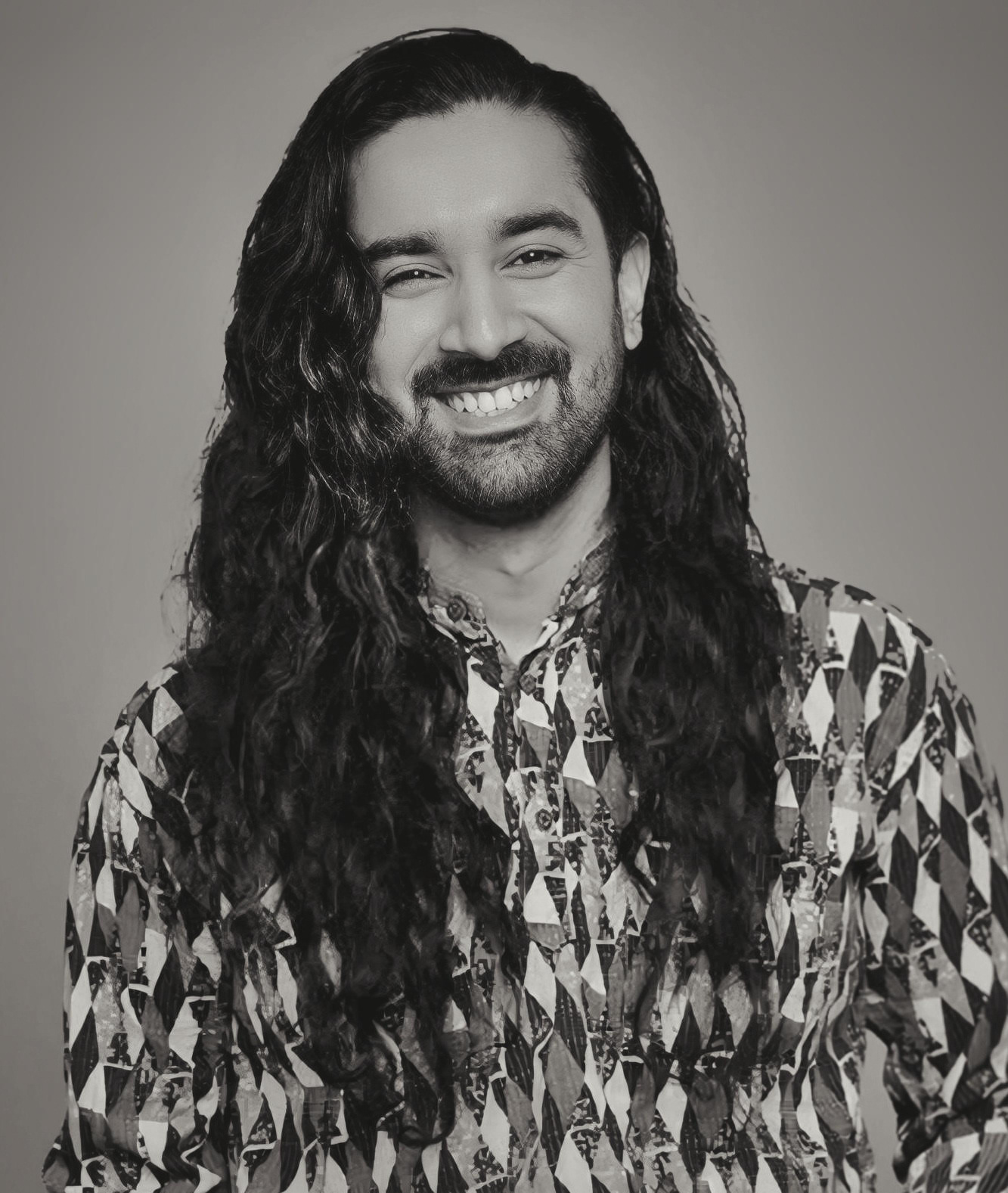
Sandeep Gurrapadi (Tenor)
Sandeep Gurrapadi is an Indian-American tenor and interdisciplinary artist whose work spans opera, devised theatre, and contemporary classical music. Over the past couple of years, he has performed with English Touring Opera, Welsh National Opera, and in 2025 appeared with Scottish Opera and Opera Holland Park in UK Theatre Award–nominated productions. In early 2026, he appears as a soloist with the London Mozart Players.
His solo performance credits include the Southbank Centre, Royal Albert Hall, Aldeburgh Festival, the Royal Opera House Mumbai, and Beijing National Stadium. He has held residencies with Britten Pears Arts, the Dartington Trust, and the Juilliard School of Music. Alongside performance, Sandeep is also a doctoral researcher at the Guildhall School of Music & Drama. His research examines cross-cultural collaboration and participatory practice across the UK, Europe, India, and the United States.
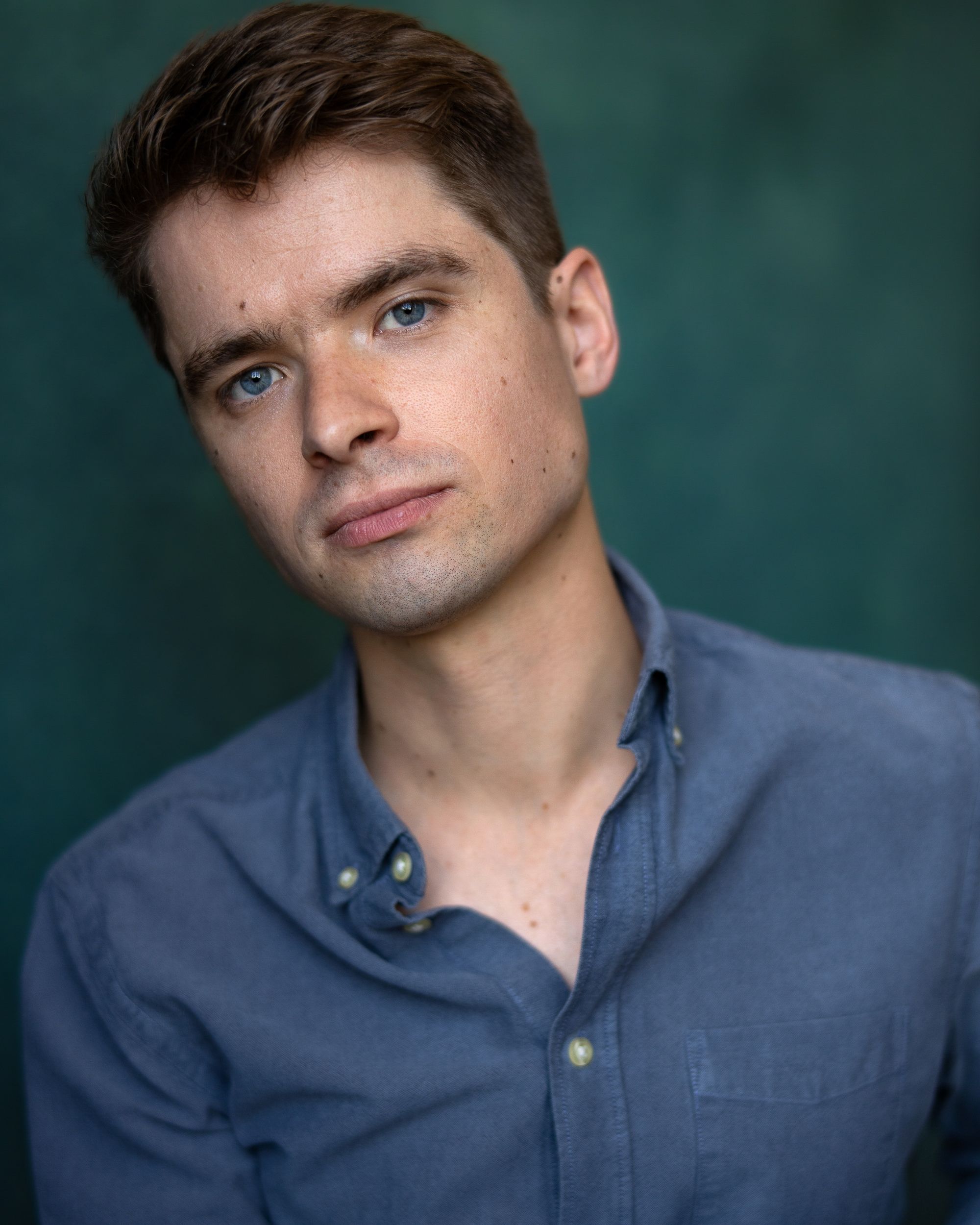
Stephen Whitford (Baritone)
Stephen Whitford is a dynamic baritone who excels in comic roles and contemporary music. He is an Opera Prelude Young Artist, and was a Britten-Pears Young Artist. He was a prize-winner in the Hurn Court Singer of the Year, Patricia Routledge Prize and Courtney Kenny Award, and a finalist or semi-finalist in the Wigmore Hall/Bollinger International Song Competition, the John Kerr Award and the Charles Wood Song Competition. Stephen speaks German, Italian and English. He has performed on BBC Radio and TV and appeared on some fifteen CD releases, both as soloist and chorister.
Recent operatic highlights include Dandini in Rossini’s La Cenerentola (Hurn Court Opera), and Hawkins “Hawk” Fuller in the European premiere of Gregory Spears’ Fellow Travelers (UCOpera). Other roles include Belcore (L’elisir d’amore), Don Giovanni, Marcello (La Bohème), Derrick (Rip van Winkle) and Louis (The Wandering Scholar, Holst). He covered Dr. Falke (Die Fledermaus) and sang Servo (La Traviata), both with The Grange Festival. In 2022, Stephen sang Kerel for the première of Linton-France’s Episoden von K. und G. in Vienna’s Schönbrunner Schloßtheater (Beethoven Ensemble).
Stephen also has a special affinity for art song, with a busy programme of recitals across the country. He was invited by Gweneth Ann Rand and Simon Lepper to join them in a recital of French Song in the Aldeburgh Festival 2024 and sang a concert of Brahms and Schumann in Vienna’s Musikverein. On the oratorio platform, he has sung the title role in Mendelssohn’s Elijah, Handel’s Messiah and Brahms’ Ein deutsches Requiem.
Stephen has studied at the University for Music and Performing Arts, Vienna, the Royal Academy of Music, London and King’s College, Cambridge, and among his teachers were Florian Boesch, Nuccia Focile, Joy Mammen, Joseph Middleton, Jonathan Papp and Sebastian Vittucci. He continues his vocal studies with Sophie Grimmer.
Chiswick Community Choir
The Chiswick Community Choir, formed in February 2024, is the brainchild of visionary musician and music educator, Zac Moxon. Zac’s initiative brings together a diverse group of singers, from seasoned performers to those who have not sung since their school days. Following their debut performance of Fauré’s Requiem alongside the Hounslow Symphony Orchestra and Chiswick Voices (a senior choir also formed by Zac), the Chiswick Community Choir has established itself as an inclusive and vibrant musical collective. They joined forces with Kew Sinfonia under the baton of Daniel Hogan for Beethoven’s iconic 9th Symphony and then, in spring 2025, they collaborated once again with the Hounslow Symphony Orchestra and conductor Dorian Dimitrov for Mahler’s powerful Second Symphony. These exciting projects reflect the choir’s growing ambition and their commitment to tackling large-scale works that push their musical boundaries.
Open to all, the choir welcomes anyone willing to put in the effort and try something new, fostering a strong sense of community through music. A key feature of the choir’s format is its project-based approach. Rather than committing to weekly rehearsals, members prepare independently, with music and recordings provided well in advance. The choir then comes together for a few intensive rehearsals leading up to each concert, allowing singers to balance their musical involvement with personal schedules. This structure ensures high musical standards while keeping the experience flexible and accessible to all.
Zac Moxon
Zac Moxon is head of music at Chiswick School. He took on the challenge of revitalising the department in late 2020, bringing a whole new way of developing music. Within only a few months, participation had risen and the school was producing twice as many concerts. Amongst mentoring a number of ensembles across a wide range of genres, he has overseen a growing choral group, who perform classical concerts in churches across the area, making quite a reputation for themselves. In 2023 he won Outstanding New Teacher of the Year at the prestigious Pearson National Teaching Awards.